

Kazakhstan’s Constitutional Reset - Stability Through Participation, Sovereignty Through the People
By Kirtan Bhana
3 February 2026
The publication of Kazakhstan’s draft new Constitution on 31 January marks a pivotal moment in the country’s post-independence political evolution. More than a legal document, the proposed Constitution represents a conscious recalibration of the relationship between state, society and citizen, one that seeks to anchor stability not in concentration of power, but in participation, legitimacy, and human-centred governance.
From an international relations perspective, the reforms underway in Kazakhstan reflect a mature understanding that durable foreign policy credibility is built first at home, through inclusive institutions, social trust and accountable governance at the domestic and local levels.
From Incremental Change to Systemic Renewal
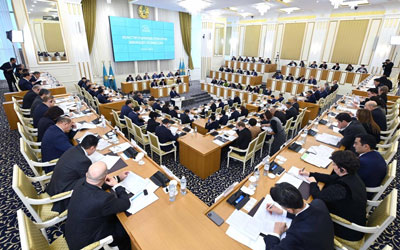
President Kassym-Jomart Tokayev’s decision to move beyond piecemeal constitutional amendments toward a comprehensive rewrite signals an acknowledgment that Kazakhstan’s political, social and economic realities have outgrown the existing constitutional framework. The reform process itself is as significant as the content of the draft. With more than 2,000 citizen proposals submitted digitally, the establishment of a broadly representative Constitutional Commission, and the public broadcasting of deliberations, the process has transparency and public ownership.
This participatory approach directly contributes to internal stability. By recognising citizens as co-authors of the state’s future, the process strengthens political legitimacy and reduces the distance between institutions and society. The planned nationwide referendum further reinforces the principle now constitutionally enshrined that the people of Kazakhstan are the sole source of state power and sovereignty.
Institutional Balance and Collective Decision-Making
The proposed shift to a unicameral Parliament (Kurultai), elected through a proportional system, reflects an effort to simplify governance while deepening political accountability. Proportional representation incentivises stronger political parties, clearer policy platforms and programmatic competition rather than personality-driven politics. This, in turn, enhances predictability and coherence in law-making, an essential condition for social stability and economic confidence.
The creation of the People’s Council of Kazakhstan as a highest consultative body with legislative initiative rights introduces an additional channel for societal interests to be articulated at the national level. This institutional innovation recognises that modern governance requires continuous dialogue between state and society, not episodic engagement during elections alone.
From a diplomatic standpoint, such consultative mechanisms are critical. They ensure that policy, whether domestic or foreign, is informed by lived realities at the local level. International engagement is most effective when it resonates with domestic priorities, social expectations and cultural sensitivities.
Rule of Law as a Foundation for Stability and Well-being
One of the most consequential aspects of the draft Constitution is the strengthening of legal guarantees and procedural rights. Constitutional protection of advocacy, reinforcement of the presumption of innocence, prohibition of retroactive punitive laws, and enshrinement of protections such as the ban on double jeopardy and the “Miranda rule” collectively signal a decisive move toward a rights-based legal order.
These measures are not abstract legal ideals; they are practical instruments of social stability. When citizens trust that the law protects them fairly and predictably, grievances are less likely to escalate into social tension. Legal certainty also creates a more attractive environment for investment, innovation and long-term planning, key components of national resilience.
Importantly, by constitutionally elevating human rights and freedoms as the highest priority of the state, Kazakhstan aligns its internal governance framework with international legal norms. This coherence between domestic law and international commitments enhances the country’s credibility as a reliable partner in multilateral diplomacy and international cooperation.
Human-Centred Development and Social Cohesion
The draft Constitution’s emphasis on education, science, culture and innovation reflects a strategic shift toward human capital as the primary driver of development. For a resource-rich country navigating global economic transformation, this reorientation is both pragmatic and forward-looking. By investing constitutionally in people rather than solely in commodities, Kazakhstan strengthens social mobility, reduces inequality and nurtures a sense of shared national purpose.
The explicit recognition of unity, interethnic and interfaith harmony as foundational values is particularly significant in a diverse society. Stability in such contexts is sustained not by uniformity, but by inclusive frameworks that respect difference while reinforcing common citizenship. The reaffirmation of secularism and the separation of state and religion further contribute to social cohesion, ensuring that governance remains neutral, inclusive and focused on universal rights.
Domestic Strength, International Confidence
From an international relations perspective, the reforms underway in Kazakhstan illustrate a core truth that states project stability externally when they cultivate legitimacy internally. A constitution grounded in participation, rule of law and human well-being equips Kazakhstan to engage the world from a position of confidence rather than vulnerability.
Partners and investors are more inclined to deepen relations with states that demonstrate institutional maturity, predictable governance and respect for rights. Moreover, Kazakhstan’s emphasis on digital rights, environmental stewardship and innovation positions it as a contemporary actor attuned to global challenges, from technological transformation to sustainable development.
Stability Rooted in the People
Kazakhstan’s constitutional reform is best understood as an exercise in collective self-determination. By placing citizens at the centre of both the process and the substance of reform, the draft Constitution seeks to convert social diversity into political strength, and institutional reform into long-term stability. For practitioners of international relations, the lesson is clear that the most enduring foreign policy influence flows from domestic systems that are trusted, inclusive and human-centred.