


Sweet Crude or Sour Diesel: Venezuela and the United States
By Kirtan Bhana

18 December 2025
Recent incidents involving U.S. warships firing on unarmed civilian vessels on unverified allegations of illicit drug trafficking, alongside the interception of oil tankers on the high seas, have reignited difficult questions about sovereignty, international law, and the true drivers of power politics. For Venezuela, these events are not isolated acts, but part of a broader pattern, one in which energy resources, particularly crude oil, sit at the heart of escalating tensions with the United States.
At face value, Washington frames its actions as enforcement: counter-narcotics operations, sanctions compliance and the protection of “global security.” Caracas, however, experiences them as coercion - maritime militarisation, economic strangulation, and the extraordinary assertion that Venezuela’s oil fields, and by extension its national destiny, fall within the strategic entitlement of the United States. When placed alongside similar U.S. rhetoric directed at Greenland and even the Gaza Strip, a troubling pattern emerges: geography and sovereignty increasingly appear subordinate to resource calculus.
To understand this confrontation, one must look beyond ideology and examine the material reality underpinning it, crude oil itself.
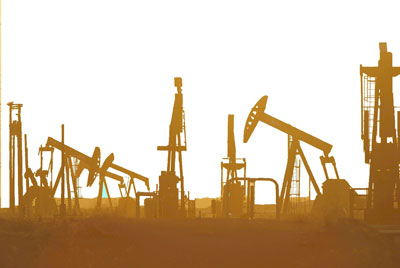
Venezuela sits atop one of the largest proven oil reserves in the world, concentrated primarily in the Orinoco Belt. Crucially, this oil is predominantly heavy crude - dense, viscous and often sulfur-rich. In purely geological terms, heavy crude oil is the most abundant form of petroleum globally, with total resources more than double those of conventional light crude. From a long-term perspective, this makes Venezuela not a marginal player, but a future cornerstone of global energy supply.
Yet abundance does not equal power, at least not immediately.
Historically, global oil production and trade have been dominated by light and medium crude oils, often described as “sweet crude.” These oils flow easily, contain fewer impurities, and can be refined cheaply into high-value products such as gasoline, diesel and jet fuel. Light crude’s higher API gravity and lower sulfur content mean lower refining costs, simpler infrastructure and faster turnaround, attributes that align perfectly with profit-driven energy markets and tightly regulated environmental standards.
Heavy crude, by contrast, is often labelled “sour diesel.” It requires complex, energy-intensive refining processes such as coking and hydrocracking to break down its large hydrocarbon molecules. Sulphur removal adds further cost. As a result, heavy crude typically sells at a discount, not because it lacks utility, but because global refining capacity and market structures have historically been optimised for lighter oils.
This technical reality has geopolitical consequences.
The United States, despite being one of the world’s largest oil producers, has long relied on specific grades of crude to match its refinery configurations. Ironically, many U.S. Gulf Coast refineries were designed to process heavy crude, much of it historically imported from Venezuela. Sanctions and supply disruptions therefore create a contradiction: Venezuela’s oil is politically “unacceptable,” yet industrially indispensable.
Herein lies the core tension. Venezuela’s heavy crude represents immense future potential at a time when conventional light oil reserves are declining globally. As processing technologies improve and energy demand remains structurally embedded in almost every sector - energy generation, pharmaceuticals, textiles, infrastructure, cosmetics, agriculture and manufacturing - the strategic value of heavy crude rises. Oil is not merely fuel; it is the bloodstream of modern economies.
This reality helps explain the aggressive posturing in the Caribbean. Control over supply chains, shipping lanes and energy flows increasingly defines global influence. Maritime interdictions, tanker seizures and military presence serve not only as enforcement mechanisms but as signals, reminders of who claims the authority to decide which oil moves, where and under whose terms.
Yet this approach carries profound risks.
First, it erodes international law. Firing on civilian vessels based on unverified claims undermines the principles of proportionality and due process. Hijacking tankers on the high seas blurs the line between sanctions enforcement and piracy by another name. When powerful states assert ownership not only over resources but over entire countries, the precedent destabilises a world already strained by conflict and mistrust.
Second, it deepens global inequality. Artificial scarcity is created through sanctions and blockades, while a global glut of consumption persists elsewhere. Energy insecurity becomes a political weapon, generating fear and uncertainty that benefit those with the power to enforce exclusion. This dynamic distorts markets and punishes civilian populations rather than political elites.
A more rational and balanced path exists.
The global energy transition does not require domination; it requires coordination. Heavy crude reserves like Venezuela’s should be approached as part of a managed, cooperative energy future, one that acknowledges declining light crude supplies while investing in cleaner refining technologies, emissions reduction and diversified energy systems. Modern refineries are increasingly capable of handling heavy crude more efficiently. With the right frameworks, heavy oil can be integrated responsibly into global supply without militarisation or coercion.
Geopolitically, this demands a shift from sanctions-first thinking to structured engagement. Multilateral agreements, transparent shipping regimes and energy-for-development models could stabilise regions rather than inflame them. For Venezuela, reintegration into global energy markets under fair terms would alleviate economic hardship while ensuring predictable supply. For the United States and its allies, cooperation would enhance energy security without undermining international norms.
Ultimately, the choice facing the Caribbean - and the wider world - is not between sweet crude and sour diesel, but between coercion and coexistence. Oil’s ubiquity makes it too important to be governed by gunboats and unilateral claims. As energy remains central to nearly every facet of modern life, the real challenge is not who owns the crude, but whether humanity can manage it without turning abundance into conflict.
In a world of vast resources and advancing technology, scarcity is increasingly a political fiction. The task ahead is to replace force with foresight, and to ensure that energy serves development, not domination.