


Guided by the Stars: A Celestial Celebration of Matariki in South Africa
by Kirtan Bhana - TDS

21 July 2025
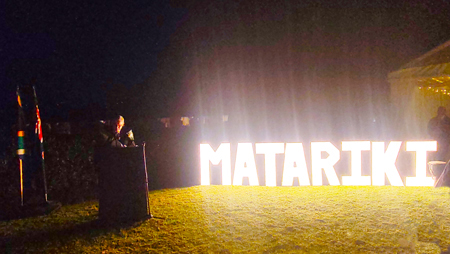
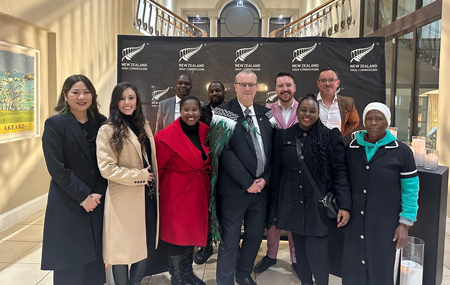
In a tribute to the infinity of the cosmos, High Commissioner Philip Hewitt of New Zealand to South Africa celebrated Matariki – the Māori New Year – on July 3 at his official residence in Pretoria.
“Mānawatia a Matariki!” he began. “Tonight, we are here to celebrate Matariki—a time to honour the past, celebrate the present, and prepare for the future, guided by the rising of the stars.”
The High Commissioner noted, “We gather not just beneath the stars, but within their stories - stories that stretch across oceans and deserts, mountains and rivers—stories that connect the people of Aotearoa New Zealand and the peoples of Southern Africa in a celestial embrace.”
Though the nations lie on opposite ends of the Southern Hemisphere, many of the same stars are visible in the night sky. And in those stars, both cultures find meaning. “These stars are not just points of light. They are calendars, guides, spirits, and teachers. They remind us that while our languages may differ, our hearts beat in rhythm with the same cosmos.”
He pointed to the Southern Cross, visible in the night sky over Pretoria. For Māori, it was used to navigate the vast Pacific Ocean—a crucial part of the great waka, the canoe of Tama-rereti. In Southern Africa, among the Sotho and Tswana peoples, the same constellation is known as Dithutlwa—the giraffes—majestic, graceful, and ever watchful.
In New Zealand, the rising of the Matariki stars (the Pleiades cluster) marks a time of remembrance, renewal, and planting. In Southern Africa, this same cluster is known to the Xhosa as IsiLimela, the “digging stars,” signaling the time to prepare the land for the growing season. “Two cultures, thousands of kilometres apart, both guided by the same shimmering sign to begin anew,” said Hewitt.
The celebration of Matariki also aligned with a significant global event. On June 10, the United Nations inaugurated the International Day for Dialogue Among Civilizations, a clarion call to humanity to reconnect with its ancestral wisdom and collective purpose in a rapidly changing global order. Matariki is about remembrance, celebrating the present, and looking to the future—ideals that deeply resonate with the spirit of intercultural dialogue.
Of Māori descent, Hewitt shared a deeply personal moment: returning with his family to Puketeraki Marae at Karitāne, on the east coast of New Zealand’s South Island—his ancestral home. “It was a moment of reconnection. A moment of healing. And for me, it was deeply moving to see my parents—each from different places and backgrounds—come together to share in this mauri ora (life force) experience.”
He also highlighted a shared value between New Zealand and South Africa: reverence for nature. “Though our landscapes differ—from islands and forests to savannas and deserts—we share a commitment to biodiversity, conservation, and indigenous knowledge.”
The 'Baby Boks', South Africa’s under-20 national rugby team, recently defeated New Zealand in the U20 World Championship final held in Italy—rekindling the legendary sporting rivalry between the two nations. This victory stirs memories of President Nelson Mandela lifting the Webb Ellis Trophy during South Africa’s historic first Rugby World Cup win in 1995, which they hosted.
To conclude the evening under the stars, Astrophysics Professor James Chibueze of UNISA and his team set up telescopes on the residence grounds, offering guests a chance to explore the night sky over Pretoria.
“So tonight, let us honour the wisdom of those who came before us—who read the sky like scripture, who planted by its signs, who journeyed by its map, and who found comfort in its constancy. We are all, in the end, children under the stars,” concluded High Commissioner Hewitt.